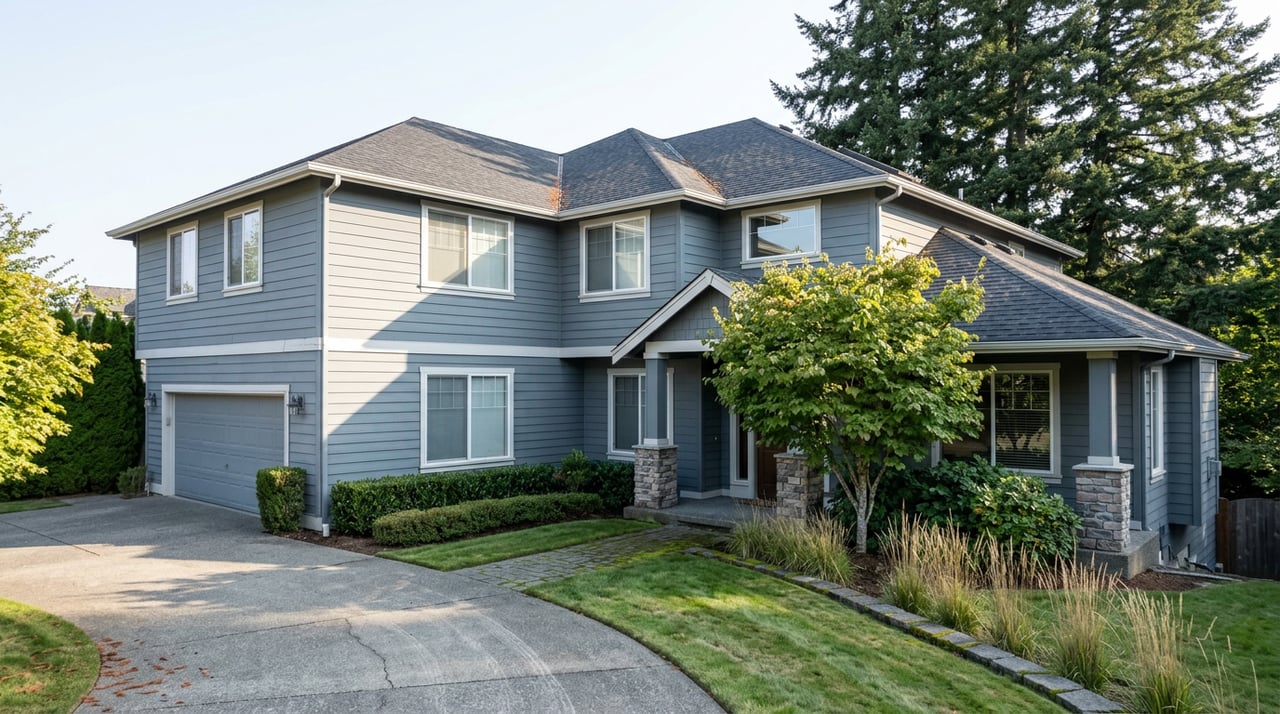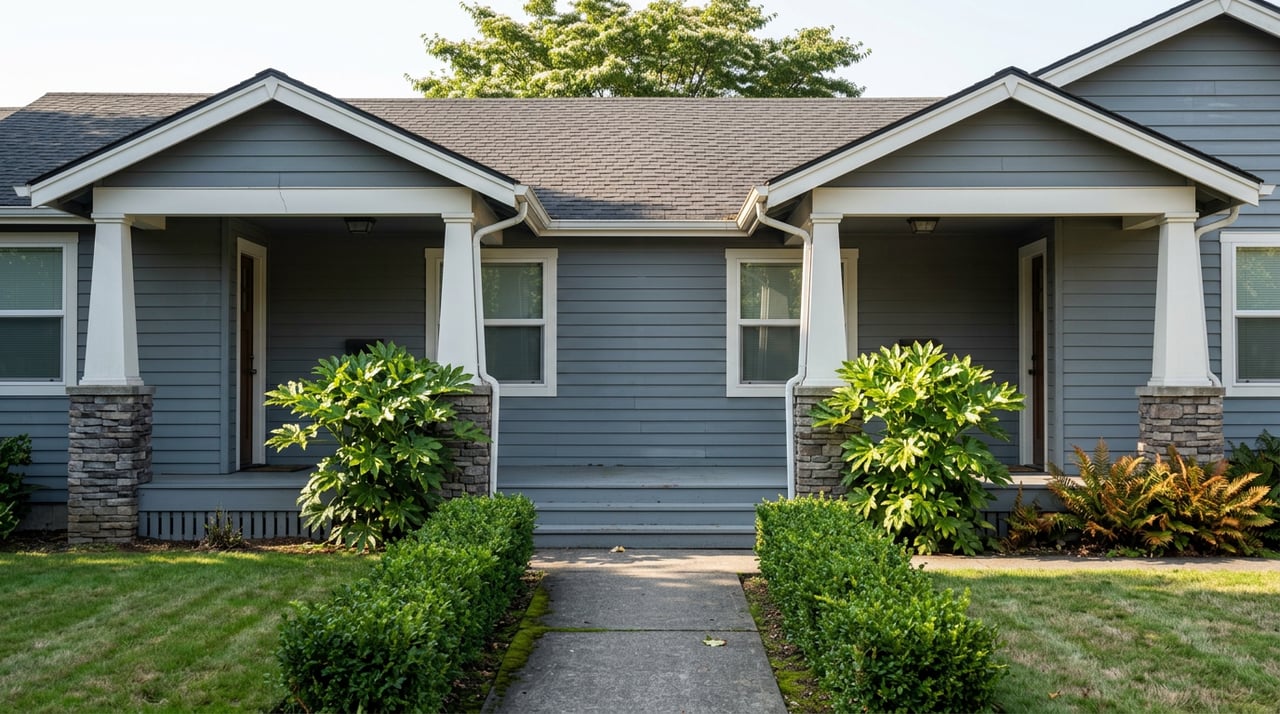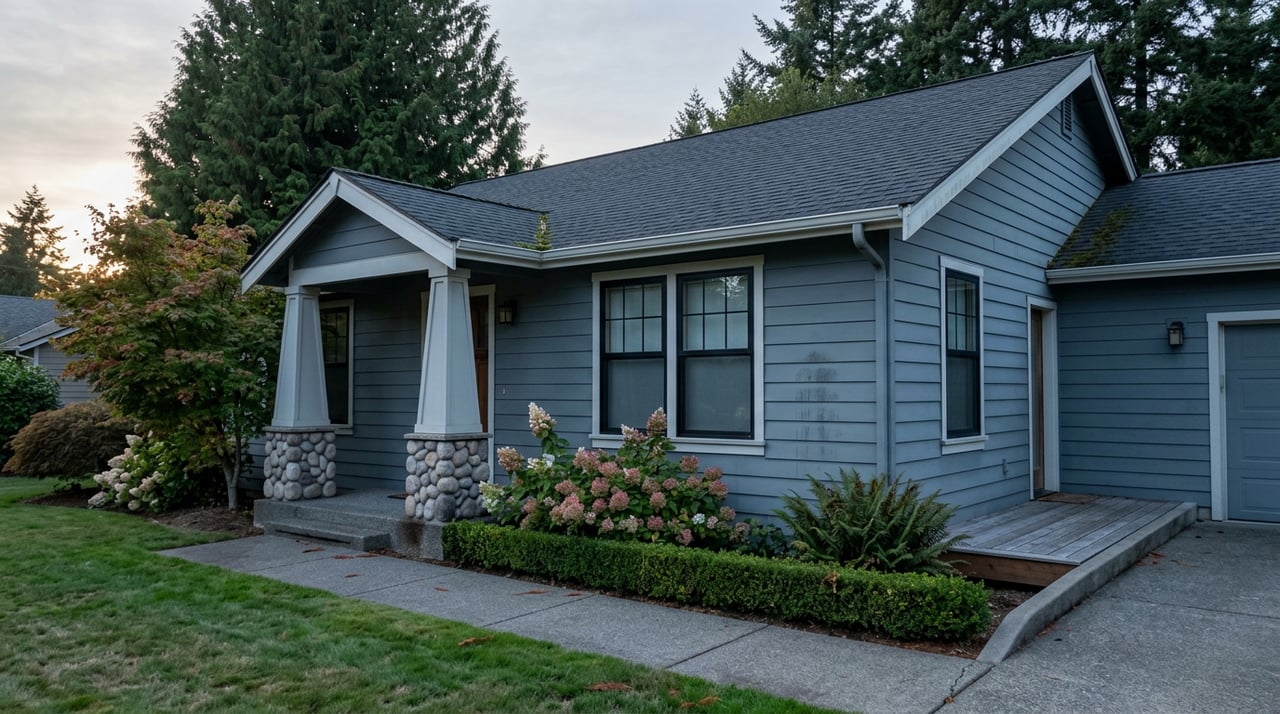
A landlord we'll call the owner of a 1990s fourplex near downtown Silverdale got the same notice every rental owner in Washington received this year: the state's new rent increase cap for 2026 tops out at 9.683 percent. She ran the math, drafted her notice, and felt reasonably confident she understood the rules.
Then a friend mentioned she'd just signed a lease at Rivulet, the new apartment building near Clear Creek. No cap language anywhere in the paperwork. No mention of 9.683 percent. Just a market rate, set fresh, with none of the restrictions the fourplex owner had spent the afternoon calculating around.
Both landlords are following the law correctly. They're just operating under two different sets of rules, and the dividing line isn't experience or intent. It's the year each building got its certificate of occupancy.
The Number Everyone's Repeating
House Bill 1217 made Washington one of the first states with a statewide cap on residential rent increases, and the Department of Commerce set the number for 2026 at 9.683 percent, effective for any increase taking effect between January 1 and December 31 of this year. The formula behind it is simple: landlords can raise rent by 7 percent plus the Seattle-area Consumer Price Index, or 10 percent, whichever is lower. For 2025 that came out to a flat 10 percent. For 2026 it landed at 9.683 percent, and Commerce will recalculate again in July for 2027.
The law also freezes rent entirely during a tenant's first 12 months, requires 90 days of written notice before any increase takes effect, and carries real teeth for violations. Tenants can recover up to three times any amount charged above the cap, and the state attorney general can pursue civil penalties up to $7,500 per violation. This is the version of the law that gets repeated in every landlord newsletter and property management blog, and it's accurate as far as it goes.
What gets left out is the part that actually determines whether any of it applies to your building.
The Line That Actually Matters
RCW 59.18.710 exempts any rental unit from the cap for 12 years from the date of its first certificate of occupancy. New construction isn't just treated more gently. For over a decade, it isn't covered at all.
That exemption is close to theoretical in a lot of Washington cities. In Silverdale, it isn't. RentCafe's market data puts the average age of a Silverdale apartment building at around 30 years, with only about a quarter of the local stock built since 2000. Most of what a landlord owns here predates the exemption window by decades, which means most Silverdale rentals are squarely inside the cap.
At the same time, Silverdale has real new supply in the pipeline that falls entirely outside it. Sound West Group, a Bremerton-based developer, partnered with Clark Construction on Rivulet, a $25.5 million, 78-unit project at the corner of Bucklin Hill Road and Blaine Avenue, built specifically to put housing within walking distance of the Clear Creek Trail and the newer hospital downtown. A short distance away, The Rush Companies has been developing Clear Creek Apartments, a five-building, 148-unit community on 8.14 acres with its own clubhouse, pool, and fitness space.
Every one of those units is exempt from the 9.683 percent cap for years to come, no matter what CPI does between now and then. Meanwhile, the fourplex built in the 1990s down the street is locked into the same rolling 12-month cap as every other pre-2014 property in town.
Here's the quick version of who falls on which side of that line:
| Covered by the 2026 cap | Exempt from the cap |
|---|---|
| Units with a certificate of occupancy older than 12 years | Units first occupied within the past 12 years |
| Most standalone rentals, small multifamily, and older apartment communities | New lease-ups like Rivulet and Clear Creek Apartments |
| Manufactured home lot rents (separate 5 percent cap under Ch. 59.20 RCW) | Owner-occupied properties of four units or fewer where the owner lives on-site |
Why Rent Trackers Can't Agree on Silverdale's Average
If you've ever pulled up two or three rent-tracking sites to sanity-check pricing on a Silverdale unit, you've probably noticed the numbers don't line up. Earlier this year, RentCafe had the average Silverdale apartment rent around $2,089, down slightly from the prior year. Zumper's figure landed near $2,000. Apartment List put the citywide median closer to $2,371. Apartments.com, pulling from newly built inventory specifically, showed an average closer to $1,989.
That spread isn't measurement error. It's what happens when a rental market stops moving as one unit. Each platform samples a different mix of buildings and unit types, and in a city where roughly a quarter of the stock has gone up since 2000 while the rest averages three decades old, those samples can land in genuinely different price tiers depending on which properties happen to get pulled into the count. Neither figure is wrong. They're each catching a different slice of a market that has split in two.
For an owner trying to price a unit, the average is close to useless on its own. What matters is which side of the 12-year line your specific building sits on, because that determines whether you're setting rent against a ceiling or setting it against the market.
The Moment the Cap Disappears
Even for owners of older, capped buildings, the restriction isn't permanent. HB 1217 only limits increases within an existing tenancy. Once a unit turns over, the landlord can set the new rent at whatever the market supports, and the 12-month no-increase clock restarts with the incoming tenant.
That turnover moment is the one point where an owner of a 30-year-old Silverdale property gets to operate under the same freedom as the owner of a brand-new unit at Rivulet. It's also the moment a lot of owners waste, either by re-signing an existing tenant at a modest increase out of habit, or by rushing to fill a vacancy without checking what comparable new construction nearby is actually commanding. Given how wide the pricing gap has become between capped and exempt inventory in this market, that comparison is worth making every time a unit comes open.
What This Means If You Own the Older Half
If your building predates 2014, the 12-year exemption almost certainly doesn't apply to you, and planning around the 9.683 percent ceiling is the right move for 2026. A few things worth confirming before your next increase notice goes out:
Check your certificate of occupancy date before assuming you're covered. If you've added units, converted a garage, or otherwise triggered a new CO more recently than you'd expect, you may have more room than the cap suggests.
Confirm you're sending 90 days of written notice, not the 60 days that used to be standard. Notice needs to be served properly, and getting the timing wrong can invalidate the increase entirely.
If you own a duplex, triplex, or fourplex and live in one of the units, you likely fall under the owner-occupied exemption and aren't subject to the cap in the first place. That's a different situation from owning a small multifamily property you don't live in, which is fully covered.
Treat vacancy turnover as your annual pricing checkpoint. It's the one moment the cap steps aside, and with new supply like Rivulet and Clear Creek Apartments actively repricing what "market rent" means in Silverdale, that checkpoint matters more this year than it has in the past.
A Few Questions Worth Settling in Advance
My duplex has an ADU I rent out separately. Does the cap apply to that unit? It depends on whether you occupy one of the units yourself. The owner-occupied exemption covers properties of four units or fewer where the owner lives on-site. If you don't live there, the ADU is treated like any other covered rental.
I just bought a building with existing tenants. Does their 12-month freeze restart because I'm a new owner? No. The freeze and the increase clock follow the tenancy, not the ownership. If a tenant has already been in place for over a year under the previous owner, you inherit that history and the standard cap applies going forward.
My building was finished in 2015. Am I exempt forever? No. The exemption runs 12 years from the first certificate of occupancy. A 2015 building loses its exemption around 2027 and becomes subject to the cap from that point on.
Rent policy in Washington is no longer a single number every landlord can memorize once and forget. It's a set of dates, exemptions, and turnover mechanics that play out differently depending on when your building was built and what's going up around it. If you own rental property in Silverdale and want a clear read on where your buildings fall and what that means for pricing this year, Gig Harbor Property Management can walk through it with you. Schedule a Free Owner Consultation and bring your certificate of occupancy dates.